Early Goose Season: How to Hunt September Geese and the Molt Migration

Early Goose Season: How to Hunt September Geese and the Molt Migration

Migrators.

Sky-high lines of giant Canada geese riding a north wind. Some Septembers in Minnesota feel like summer hanging on with 80-degree afternoons, others feel like fall showing up early with 50-degree mornings and a bite in the air. But when the birds are moving, none of that really matters—you’re still watching clouds roll in, still reaching for the call, and still trying to pull those geese down over the decoys.

That’s what comes to mind when I think about early goose season in the Upper Midwest.

Opening day always carries its own excitement. For a waterfowl hunter, those dates get circled on the calendar long before the season arrives. But early goose season offers something else—the first real hint that summer is ending and another waterfowl season is about to begin. For Canada goose hunters across the Upper Midwest, it’s the first chance to get back into the field.

And if the weather lines up just right, it can bring something even better.

Molt Migrators.

The September Migration 
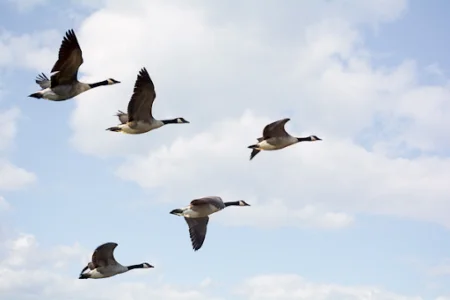
If you’ve never experienced a true September molt migration in the Upper Midwest, you’re missing one of the greatest shows in waterfowl hunting.

For those not familiar with the molt migration, Canada geese—particularly nonbreeders and unsuccessful breeders—can travel considerable distances north to traditional molting areas during the summer. By late summer and early fall, those birds are back on the wing and beginning to move south.

Exactly what you’re seeing when a big September push comes through is harder to know from the blind. Are they returning molt migrants? Birds relocating from northern summer grounds as food sources change? Or are they simply doing what birds do—migrating because it’s time to push and the first real cold front told them to go?

Hunters will probably debate that part forever.

But if you hunt geese long enough in the Upper Midwest, you know the phenomenon.

A strong September cold front arrives. The temperature drops. The wind swings around from the north.

And you start looking at the sky.

Reading the Weather for Early-Season Geese

So how do you know when the molts are going to roll?

The answer is simple.

Weather.

The complicated part is knowing which weather to watch.

I’m looking for the first real punch of fall. A sharp temperature drop is a good start. I want to see strong north winds and a cold front with enough strength behind it to move birds.

But I’m not just checking tomorrow’s forecast where I’m hunting.

I’m looking north.

Way north.

When I see a promising weather pattern developing, I’ll start checking forecasts from Churchill, Manitoba, down through Winnipeg, northwestern and north-central Minnesota, and western Ontario. I’m trying to understand what is happening hundreds of miles north of me and follow that weather as it works its way south.

What I Watch For in the Forecast:

  • A meaningful temperature drop
  • North winds behind the front
  • Cold developing well north of the hunting area
  • A front progressing steadily south

And then you wait.

Not every cold front produces migrators, and not every early goose season gives you one of those unforgettable days. That’s part of what makes them special.

But every once in a while, everything lines up.

Molt Migrator Monday

The last truly unforgettable molt migration I experienced in Minnesota happened on September 7, 2020.

I call it Molt Migrator Monday.

Everything lined up.

The week leading into opening weekend, the forecast was screaming that Labor Day could be the day. The pattern held. The cold was coming. The wind was coming.

And everybody knew it.

By Labor Day morning, goose hunters across the Upper Midwest were waiting.

Then things got crazy.

People were killing geese all across the top of the flyway. Snapchat was going wild. Facebook and Instagram were filling up with photos and videos. Text messages were coming nonstop from hunting group to hunting group.

Ask a goose hunter who was out that day what they remember about September 7, 2020, and there’s a good chance you’ll get a grin before they even start talking.

We knew what kind of day it could become, so we planned accordingly.

We set up on a loaf pond with a trailer blind and a big spread of full-body decoys and floaters. It was one of those setups that just looked right.

We even packed breakfast and lunch to cook in the blind.

Because that’s another thing about hunting migrators:

You have to be willing to wait.

You can sit there all morning wondering whether you completely misread the weather. The sky can be empty.

Then at 10:30, you see it.

That first line coming from the north.

And everything changes.

When the Sky Opens Up

Because we were hunting water, we hadn’t broken down much of the spread after the early groups of local birds.

That turned out to be a good decision.

By late morning, the script flipped and the big groups wanted down on the water.

Then it was our turn.

We worked big wads of geese. Smaller groups. Singles that seemed to fall straight out of the clouds.

Some birds would circle and work. Others looked like they had already made their decision before they reached us. They’d dump the air and give it up all the way into the spread.

We even managed to pick up a band from Churchill, Manitoba, that day.

It was one of those hunts where you spend the entire time thinking, This is actually happening.

How to Set an Early-Season Goose Spread

The setup we used that day was big, but I don’t always believe more decoys are better during early goose season.
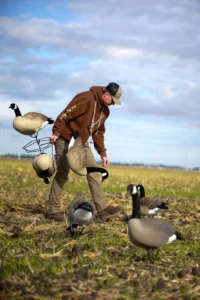
 

When we’re hunting smaller groups of local birds, I like a natural-looking spread.

I’ll mix Rogue Series Full Body Decoys, Dominator Series Full Body Decoys, and Rogue Series Goose Sleeper Shells, but I don’t pack everything into one tight group. I prefer a loose, wide-open spread with smaller groups scattered throughout—some birds close together and others separated by plenty of space.

In green fields, hay fields and other early-season situations, that can look much more natural than one giant concentration of decoys.

There’s another advantage to spreading things out: it keeps approaching geese from becoming fixated on one specific area of the spread—and potentially one specific area where we’re trying to hide.

On water, I like the same philosophy of keeping things simple and versatile.

I run my Rogue Series Floating Goose Decoys on Texas rigs with longer lines—usually around 72 inches—and heavier 8-ounce weights. That gives me enough line and weight for bigger water or windy conditions without creating problems when we move to smaller water.
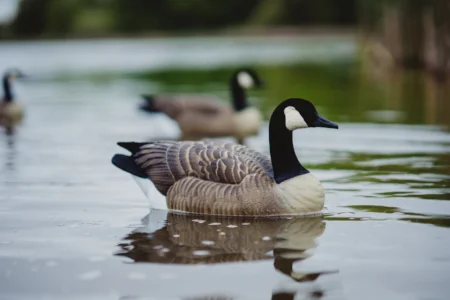
I’d rather have one rig that works almost everywhere than spend my season changing rigs for every hunt.

How to Hide for Early Goose Season

Early-season concealment creates its own challenges.

Everything is still green. Crops and grasses haven’t necessarily reached the same colors and textures we’ll see later in the fall.

And then there’s the dew.

Ask hunters what they enjoy least about setting a blind in September and stuffing wet vegetation into it before sunrise probably won’t be high on the list.

That’s one reason I like using ghillie material early in the season.

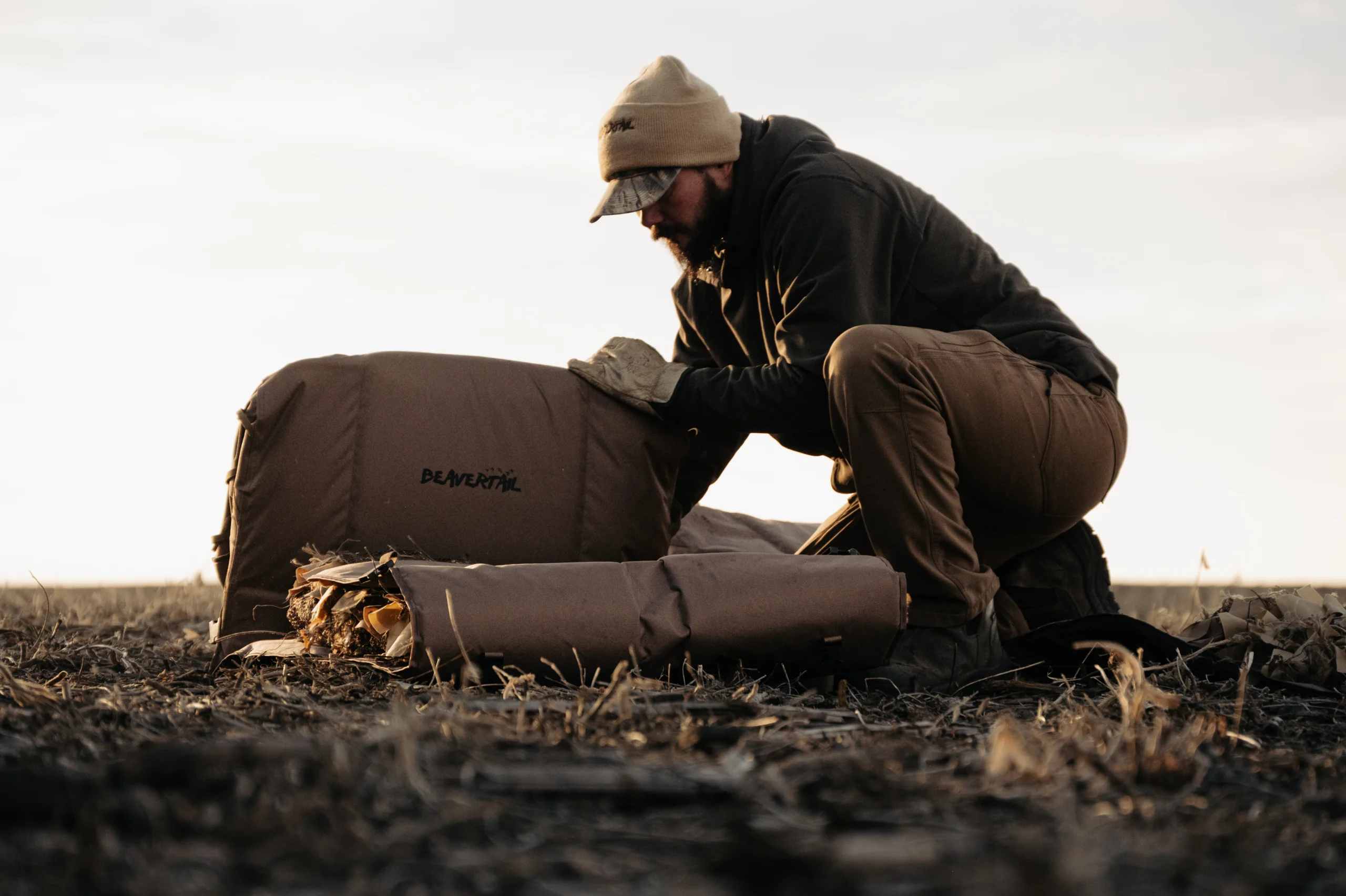
For green vegetation, I like pairing the Rampage Backpack Blind with a Green Field Concealment Blanket. In wheat, hay or lighter-colored fields, the Golden Grain blanket that comes with the Rampage is a natural fit. Either setup gives us a strong starting point while reducing how much natural material we need to add.

The backpack storage in the Rampage is another small detail I appreciate. Calls, extra clothing and other gear can disappear underneath the backrest instead of becoming clutter scattered around the blind.

Early-season geese haven’t seen months of hunting pressure yet.

That doesn’t mean they’re stupid.

A natural spread and a clean hide still matter.

Four Dogs

As memorable as the geese were on Molt Migrator Monday, one of my favorite memories from that hunt wasn’t really about the geese at all.

It was the dogs.
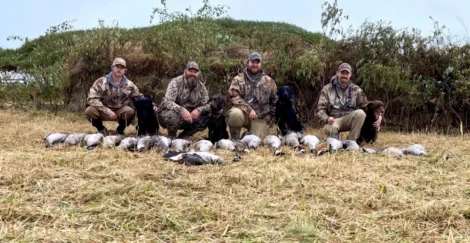
We had four dogs with us that day, which isn’t something we’d normally do. Every dog stayed under control on a check cord, and after each volley we’d take turns sending two dogs.

Watching two well-trained retrievers work together is something every waterfowl hunter should experience at least once.

Watching four dogs work in pairs throughout a day like that was incredible.

Looking back at it now means even more.

One of those dogs is no longer with us.

The other three have become veterans, and one is now 11 years old and heading into what could be her final season—or one of her final seasons.

That’s the thing about opening days.

When you’re younger, they feel endless.

Another September. Another opener. Another season.

But eventually you realize they aren’t endless.

The dogs get older. Hunting partners change. Kids grow up. Places change. And some of the people and dogs that were there for the hunts you’ll talk about forever won’t always be sitting next to you when the next opening day arrives.

Maybe that’s part of why we watch the weather so closely.

Why a north wind in September can make it hard to concentrate on anything else.

Why we remember a single Monday from six years ago like it happened yesterday.

The seasons don’t always begin like September 7, 2020.

But every year, when the calendar turns to September, we know there’s another chance.

Another cold front.

Another line of geese appearing from the north.

Another morning with good buddies and great dogs.

Another beginning.

That’s early goose season in the Upper Midwest.

And I wouldn’t miss it.

In Memory of Mowgli

By Ben Marleau

U.S. Sales Manager | Beavertail Outdoors & DOA Products

Published July 2026

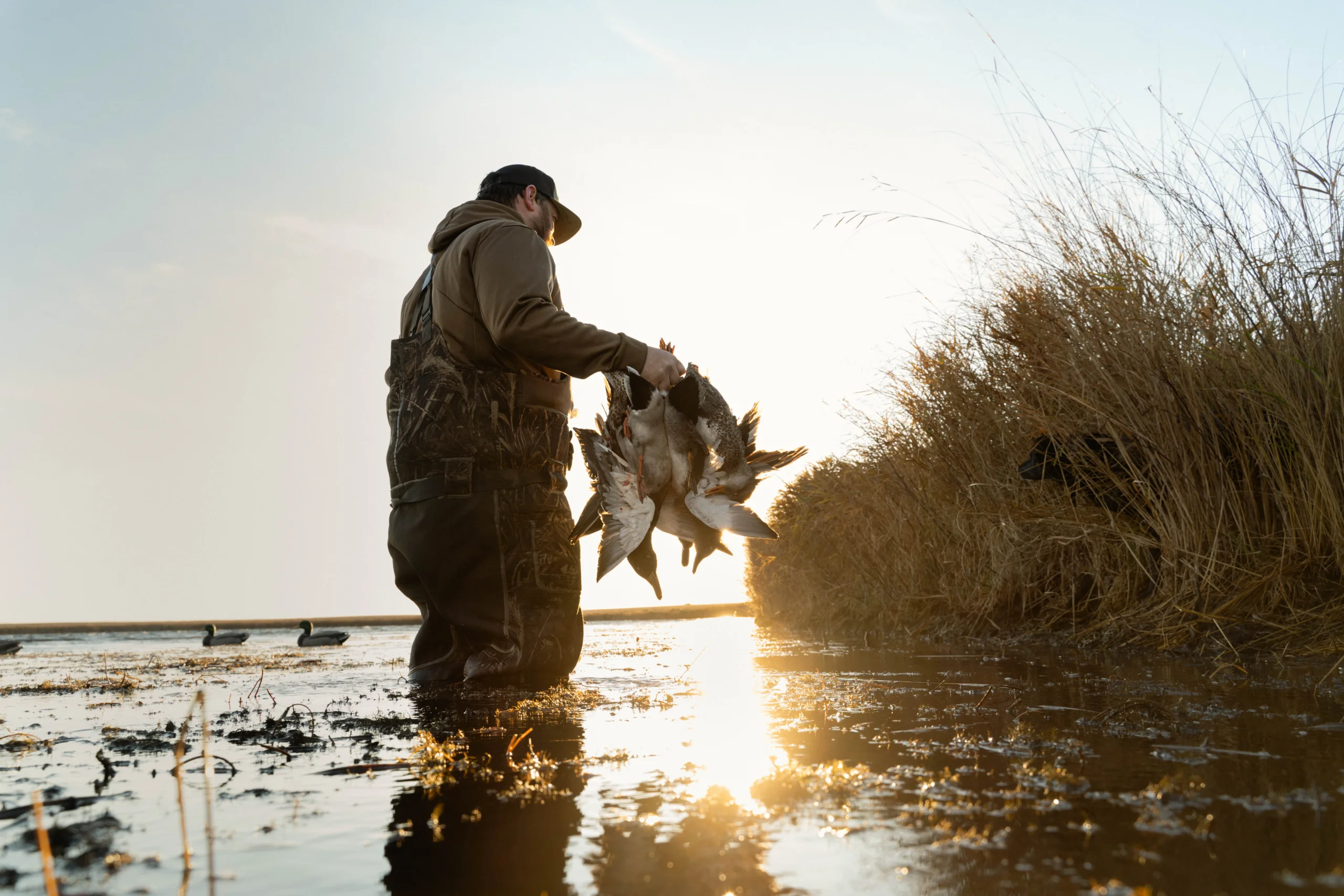
From full-body decoys and floaters to blinds and concealment, build your early-season setup with gear designed by waterfowl hunters.
Shop Goose Hunting Gear →

How Do Some Waterfowl Hunters Always Seem to Be on Birds?

By Ben Marleau

U.S. Sales Manager | Beavertail Outdoors & DOA Products

Published July 2026

Waterfowl Hunting Tips Beyond Social Media

Social media has changed the way we experience waterfowl hunting.

Every day it seems like someone is under fresh birds, shooting limits, and posting another unforgettable hunt.

After a while, it’s easy to start asking yourself, how are they doing it?

The truth is simple. Thousands of hunters are creating content every season. Statistically, someone is going to be under birds every single day. Social media simply stitches those moments together into what feels like one endless perfect season.

Great Hunters See the Hunt Before They Build It

Here’s the real story. Some hunters consistently find birds, but those birds aren’t always fresh. Many have been hunted for days or even weeks. Around camp, we like to call those birds “Einsteins.” They’re wary, unpredictable, and quick to expose mistakes. What separates consistently successful hunters isn’t luck—it’s how they approach the hunt.

Imagine pulling up to your favorite field or pothole. Before you ever throw a decoy, you can already picture how the morning is going to unfold. That’s what the hunters who consistently kill birds do.

I’ve been fortunate enough to hunt with some incredible waterfowlers—people I honestly consider among the best in the game. Ironically, most people will never know their names. Their social media presence is practically nonexistent. When I say, “the best,” I don’t mean every hunt is a burner. I mean they can visualize the hunt before it ever happens.

While publications like Wildfowl Magazine regularly feature successful hunts and expert advice, the common thread is rarely a secret decoy spread or a magic calling sequence. It’s preparation, scouting, and understanding how birds use the landscape.

They don’t just scout fields—they study them

They walk the terrain, paying attention to the contours, fence lines, tree rows, how the crop is lying, where equipment turned during harvest, how the shadows will change through the morning, and how the wind will interact with every one of those features.

Before a single decoy is placed, they’re already building the hunt in their mind.

They’re not always right.

No one is.

But they’re right far more often than they’re wrong.

The Difference Isn’t Luck

Every one of these hunters has their own style. They call differently, run different spreads, and hunt in their own unique way. But they all share two things in common: they see the hunt before they build it, and they spend more time perfecting their hide than anything else.

Because at the end of the day, the hide is the single biggest factor in the success of a hunt. The best decoy spread you could put together won’t matter if the birds pick you out before they ever get close enough to commit.

So, the next time you catch yourself wondering how some hunters always seem to be under birds, remember this:

They struggle too.

They miss opportunities.

They hunt educated birds.

The difference is that they’ve spent years training themselves to notice the little things most hunters overlook.

Before the first decoy comes out of the trailer, they’ve already hunted the morning in their mind.


Continue Reading

If you enjoyed this article, you may also like The Evolution of Waterfowl Hunting: Honoring Tradition, Driving Innovation

Learn how decades of innovation continue to shape the way today’s hunters approach the marsh.

The Evolution of Waterfowl Hunting: Honoring Tradition, Driving Innovation

By Ben Marleau
U.S. Sales Manager | Beavertail Outdoors & DOA Products

Published July 2026

Waterfowl Hunting Has Always Been About Adaptation

Waterfowl hunting has come a long way.

Laying in whites. Homemade backboards. A-frame blinds built from hog panels. Hunting over 737s—the original Magnum shells. Decoys made from old tires, tar paper, and plastic bags. Hunters wore flannel and camouflage that looked nothing like the marshes they were trying to disappear into.

Looking back, it can be hard to believe how effective those methods really were.

For hunters who never experienced those early days or heard the stories firsthand, it almost sounds too simple to be true. Yet season after season, those hunters proved that success wasn’t about owning the newest gear. It was about understanding waterfowl behavior, adapting to changing conditions, and making the most of what they had.

They were the pioneers who shaped modern waterfowl hunting.

Publications like Wildfowl Magazine continue to document the people, gear, and techniques that move the sport forward.

The Best Ideas Never Really Disappear

Many people assume innovation means replacing what came before.

We don’t.

If a hunting method worked decades ago, we ask ourselves why it worked.

If people stopped using it, what changed?

Was it because the idea stopped working—or because better materials and manufacturing finally caught up with it?

Over the last several decades, we’ve watched laying in whites make a comeback. At the same time, we’ve met plenty of hunters who never abandoned the technique at all. They simply kept it in their back pocket for the right conditions.

The ideas never changed.

The materials simply made them better.

Tyvek replaced plastic bags.

Modern synthetic fabrics replaced tar paper and homemade solutions.

Today’s waterfowl hunting gear is lighter, stronger, quieter, and more durable than ever before, but many of the principles behind successful concealment remain unchanged.

Waterfowl Hunting Innovation Starts in the Field

That philosophy guides every product we build.

We don’t innovate simply to release something new.

We don’t chase trends.

We start by asking a simple question:

Does this make the hunt better?

If the answer is no, it doesn’t move forward.

Whether we’re improving a layout blind, refining a decoy system, designing hunting accessories, or rethinking how gear performs in changing conditions, every product must solve a real problem waterfowl hunters face.

Because we’re hunters first.

If we wouldn’t trust it on our own hunts, we won’t ask someone else to.

Respect the Past. Build for the Future.

The best innovations don’t ignore history.

They build on it.

Sometimes that means improving one of our own products after years of listening to customer feedback and discovering a better solution.

Other times, it means taking an old hunting concept and applying today’s materials and manufacturing methods to make it better than ever.

Innovation isn’t about forgetting where we came from.

It’s about honoring the ideas that worked while building equipment that helps today’s hunters spend more productive days in the field.

More Than Products

At Beavertail, we believe every product has a story.

Where the idea came from.

What problem it solves.

How it evolved.

And where it’s headed next.

Because that’s the cycle of innovation.

Honor what worked.

Improve what can be better.

Build for the future without forgetting the past.

Welcome to the Beavertail Journal

This blog is where we’ll share hunting stories, product insights, field-tested techniques, and the thinking behind the gear we build.

Whether you’re chasing early-season teal or late-season honkers, we’re glad you’re here. We hope you’ll join us as we continue to learn, innovate, and celebrate the tradition of waterfowl hunting together.

Have a story, idea, or hunting lesson you’d like us to explore? We’d love to hear from you as we continue building the Beavertail Journal.

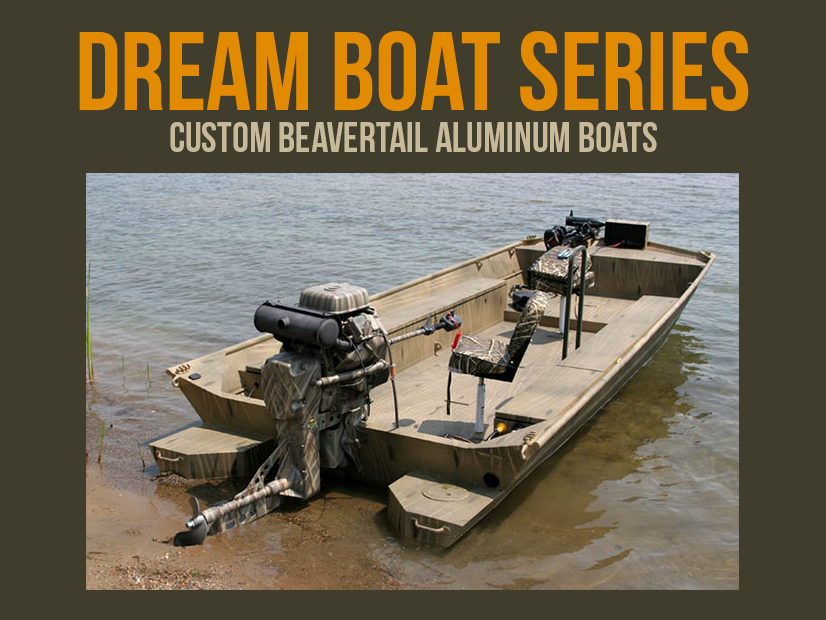
DREAM BOATS: FISHING MACHINE!

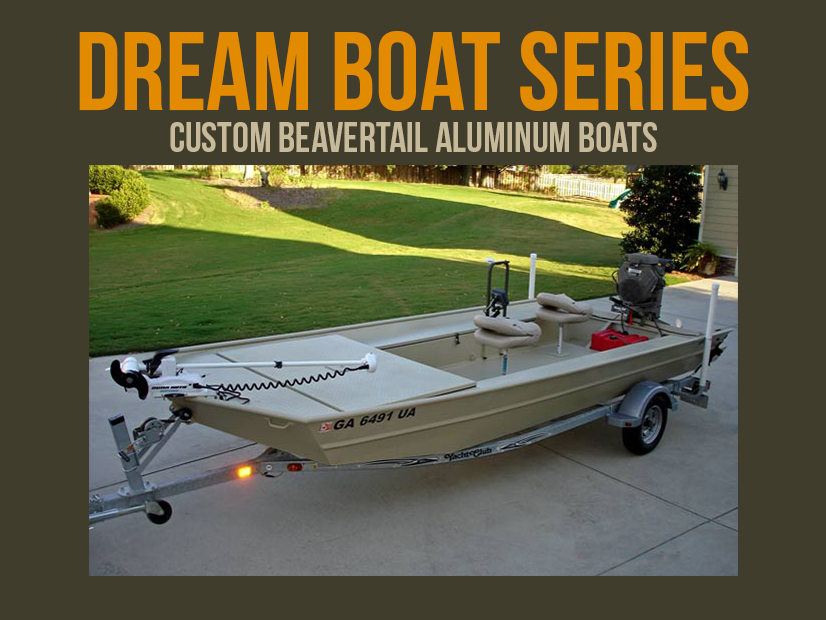
At Beavertail we are busy building your dream boat.

When we were asked by a customer in Georgia to build a Custom Beavertail Aluminum Boat that could be used for fishing the numerous estuaries along the Georgia Coastline, we jumped on the opportunity! These estuaries are where the tide meets the streams/rivers and they are known for varying water levels ranging from a few inches, to several feet deep. To access these rivers and streams, our customer needed a watercraft that could handle anything these rivers could do to present a challenge.

After meeting with the customer to understand both his basic needs, and the options he wanted on his new Beavertail Custom Aluminum Boat, our team went to work on building a one of a kind Custom Coastal Fishing Machine!

The customer decided he wanted an extended front deck, wider gun/storage boxes, custom epoxy pain, as well as pre-wired options for a GPS and boat electronics. To power this fishing machine, our customer decided on a Gator Tail Shortshaft to make this an ideal inland/coastal fishing boat.
beavertail-custom-fishing-machine

DREAM BOATS: CAST & BLAST JON

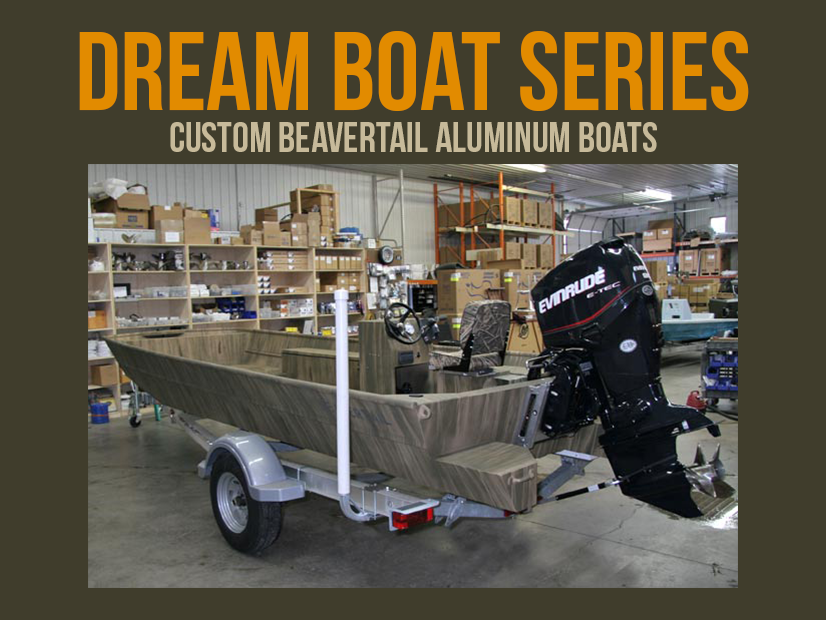
At Beavertail, we are busy building your dream boat.

Our customer Tim Dickey from Broken Arrow, Oklahoma asked us to design a custom watercraft that could be used for waterfowl hunting in the morning, and fishing in the evening. Being located at the Southern portion of the Central Flyway, Tim spends much of the winter months hunting ducks and geese. Trailering from pond to pond, heading out on large reservoirs, and river hunting for Mallards are just a few of Tim’s favorite past-times.

From the point of initial contact, our team was busy designing a boat that Tim could use in a variety of fashions. We built his dream boat, an 18′ Beavertail Custom Aluminum Boat, equipped with our Floatation Pods, a custom side console, large gun boxes and a 2500 Lb heavy duty trailer. Due to the variety of ways Tim planned on utilizing his boat, he equipped it with a 90 HP Evinrude. This is the ultimate Cast & Blast Jon Boat!

beavertail-cast-and-blast-jon

DREAM BOATS: MULTI-PURPOSE JON

At Beavertail, we are busy building your dream boat.

In this week’s Dream Boat Series we felt like we needed to re-write history. To start, let’s look up the difference between a Jon Boat, and a Beavertail Multi-Purpose Jon Boat.

Define: Jon Boat

Noun

  1. a light, square-ended, flat bottom skiff, used in shallow water.

Define: Beavertail Multi-Purpose Jon Boat

Noun

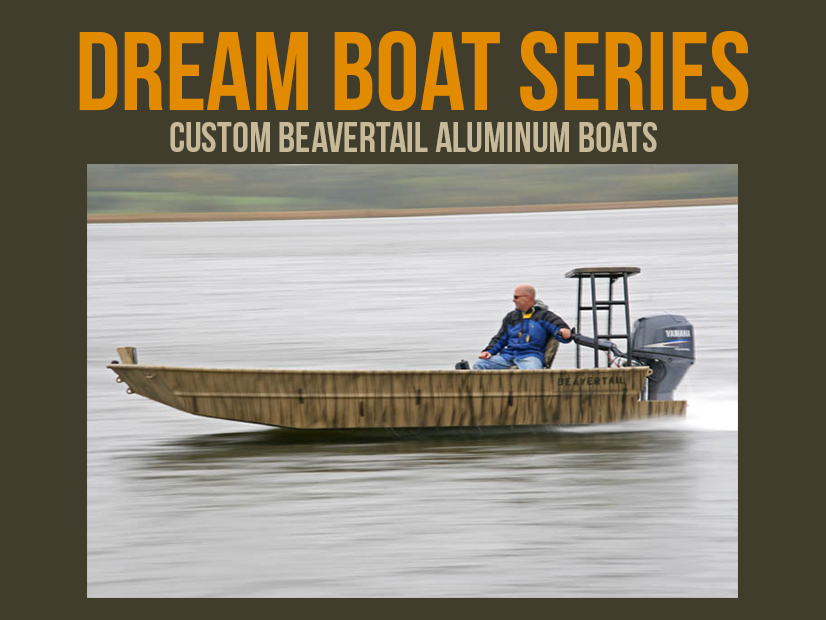
  1. a light, fully customizable watercraft that can be used in deep or shallow water for hunting, fishing, or pleasure. Such as the 1700 Series Beavertail Custom Aluminum Boat pictured below.

When our customer first initiated contact with Beavertail, he made us aware he wasn’t interested in “Granddad’s Jon Boat.” He was interested in seeing his dream boat come to life, and our team helped make that dream a reality.

This 17′ Beavertail Custom Aluminum Boat was custom built from the hull up, to include the option to be powered by a 60 HP Yamaha Outboard Motor, complete with our Floatation Pods, Gun Boxes, a Live Well, Poling Platform, and Garmin Electronics. This is the perfect boat for fishing, hunting, or just taking a cruise over to the neighbors place for a BBQ. This is, the Multi-Purpose Jon Boat from Beavertail.

beavertail-multi-purpose-jon

DREAM BOATS: MONSTER JON

At Beavertail, we are busy building your dream boat.

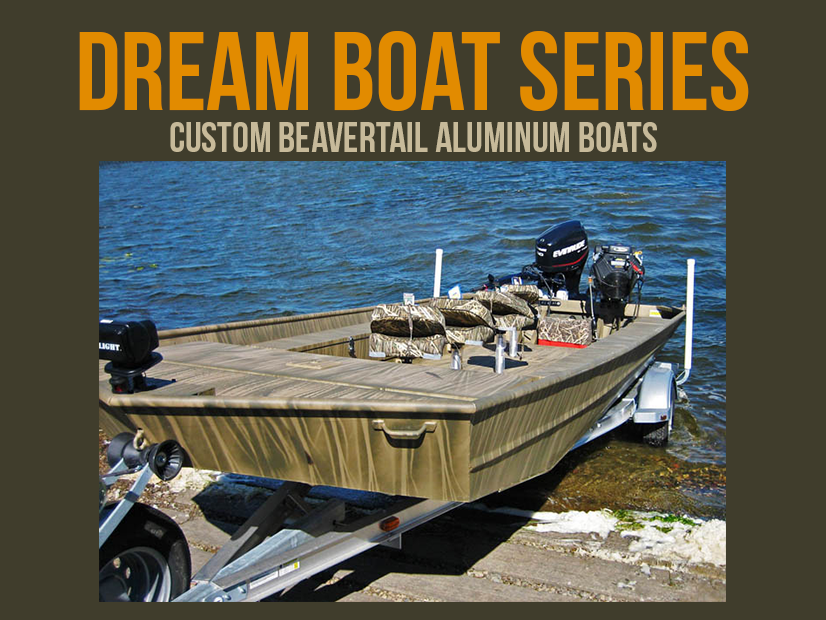
Our customer Joe Fox of Burlington, WI wanted us to create the biggest, baddest watercraft we ever created. Joe filled us in on his custom design spec, as well as the additional custom boat options he was hoping to have on his new Dream Boat.

At over 20 feet long, Joe’s Beavertail 2072 was nicknamed the “Monster Jon.” Joe’s boat has a beam of 96 inches (8 feet long!), and this boat was made for serious hunting and fishing excursions. Powering this beast is a 90 HP Evinrude E-Tec, as well as a 35 HP Beavertail Long Tail Mud Motor. There is literally no stretch of water that this boat can’t punish. Complete with seating for four, a swamp light at the bow, and custom camo paint – this boat was ready for the water on the day Joe took delivery.

beavertail-monster-jon

DREAM BOATS: ALL PURPOSE JON

At Beavertail, we are busy building your dream boat.

When it comes to a Jon Boat, most folks are looking for a lightweight, flat bottom boat that can be easily hauled from duck pond, to the next pothole, or even a small river or stream. Compromising on quality, craftsmanship and features shouldn’t be part of a boat building experience. At Beavertail Custom Aluminum Boats, we can build your Dream Boat.

This wasn’t the first opportunity for Beavertail Boats to build an all-purpose Jon Boat that could handle ponds, lakes, rivers and streams. However, we typically don’t build any two boats the same.

This Custom Beavertail Aluminum Boat is an 18′, Custom Camo Painted, all purpose Jon Boat. This model is equipped with Extra Wide Gun Boxes, a Live Well, Fishing Electronics, and a Trolling Motor. Powering this watercraft is a Beavertail Long Tail Mud Motor. An all purpose Jon Boat should truly be unique in it’s “all purpose” fashions, which is why we call this the Beavertail All Purpose Jon Boat!beavertail-all-purpose-jon