
The Evolution of Waterfowl Hunting: Honoring Tradition, Driving Innovation
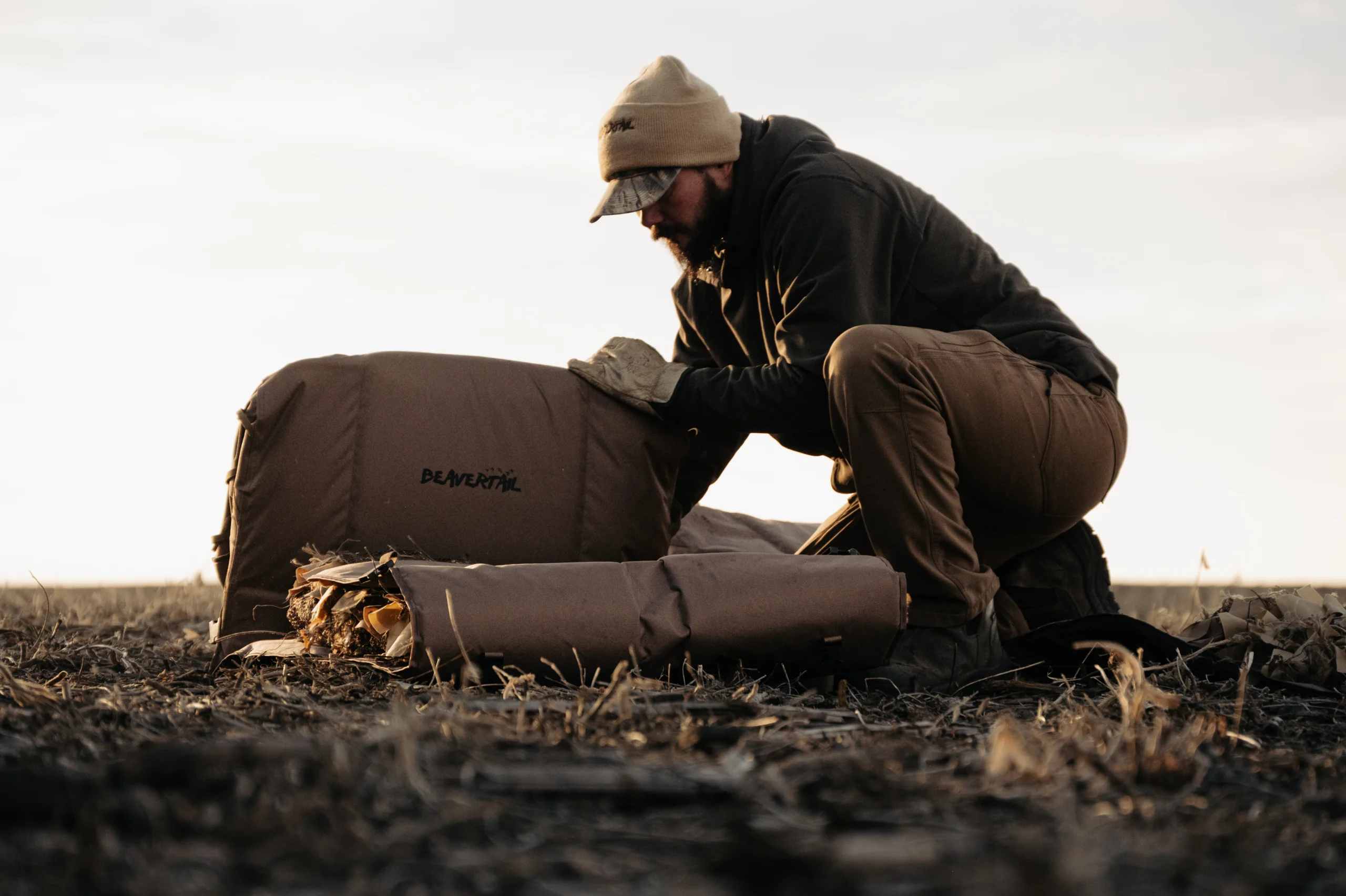
By Ben Marleau
U.S. Sales Manager | Beavertail Outdoors & DOA Products
Published July 2026
Waterfowl Hunting Has Always Been About Adaptation
Waterfowl hunting has come a long way.
Laying in whites. Homemade backboards. A-frame blinds built from hog panels. Hunting over 737s—the original Magnum shells. Decoys made from old tires, tar paper, and plastic bags. Hunters wore flannel and camouflage that looked nothing like the marshes they were trying to disappear into.
Looking back, it can be hard to believe how effective those methods really were.
For hunters who never experienced those early days or heard the stories firsthand, it almost sounds too simple to be true. Yet season after season, those hunters proved that success wasn’t about owning the newest gear. It was about understanding waterfowl behavior, adapting to changing conditions, and making the most of what they had.
They were the pioneers who shaped modern waterfowl hunting.
Publications like Wildfowl Magazine continue to document the people, gear, and techniques that move the sport forward.
The Best Ideas Never Really Disappear
Many people assume innovation means replacing what came before.
We don’t.
If a hunting method worked decades ago, we ask ourselves why it worked.
If people stopped using it, what changed?
Was it because the idea stopped working—or because better materials and manufacturing finally caught up with it?
Over the last several decades, we’ve watched laying in whites make a comeback. At the same time, we’ve met plenty of hunters who never abandoned the technique at all. They simply kept it in their back pocket for the right conditions.
The ideas never changed.
The materials simply made them better.
Tyvek replaced plastic bags.
Modern synthetic fabrics replaced tar paper and homemade solutions.
Today’s waterfowl hunting gear is lighter, stronger, quieter, and more durable than ever before, but many of the principles behind successful concealment remain unchanged.
Waterfowl Hunting Innovation Starts in the Field
That philosophy guides every product we build.
We don’t innovate simply to release something new.
We don’t chase trends.
We start by asking a simple question:
Does this make the hunt better?
If the answer is no, it doesn’t move forward.
Whether we’re improving a layout blind, refining a decoy system, designing hunting accessories, or rethinking how gear performs in changing conditions, every product must solve a real problem waterfowl hunters face.
Because we’re hunters first.
If we wouldn’t trust it on our own hunts, we won’t ask someone else to.
Respect the Past. Build for the Future.
The best innovations don’t ignore history.
They build on it.
Sometimes that means improving one of our own products after years of listening to customer feedback and discovering a better solution.
Other times, it means taking an old hunting concept and applying today’s materials and manufacturing methods to make it better than ever.
Innovation isn’t about forgetting where we came from.
It’s about honoring the ideas that worked while building equipment that helps today’s hunters spend more productive days in the field.
More Than Products
At Beavertail, we believe every product has a story.
Where the idea came from.
What problem it solves.
How it evolved.
And where it’s headed next.
Because that’s the cycle of innovation.
Honor what worked.
Improve what can be better.
Build for the future without forgetting the past.
Welcome to the Beavertail Journal
This blog is where we’ll share hunting stories, product insights, field-tested techniques, and the thinking behind the gear we build.
Whether you’re chasing early-season teal or late-season honkers, we’re glad you’re here. We hope you’ll join us as we continue to learn, innovate, and celebrate the tradition of waterfowl hunting together.
Have a story, idea, or hunting lesson you’d like us to explore? We’d love to hear from you as we continue building the Beavertail Journal.